


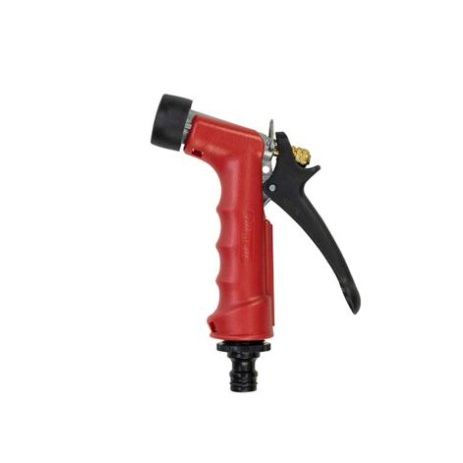
Gilmour Wash Down Gun
Talk to a specialist.
Sizing, regulations, installation. Our team has been answering these questions for 28 years.
Water Pumps And Accessories FAQs
What type of water pump do I need?
Booster pumps raise pressure in an existing supply. Transfer pumps move water between tanks. Submersible pumps sit in the water and are used for boreholes, sumps and tanks. Pressure sets combine pump, vessel and controls for automatic operation.
Choosing badly usually means choosing on flow rate alone and ignoring the head the pump must overcome.
What is head and why does it matter?
Head is the vertical height the pump must lift water plus the pressure losses in the pipework. A pump rated for high flow at zero head may deliver very little at the height you actually need.
Always read the pump curve rather than the headline flow figure, and calculate the total head including pipe friction.
What is a pressure vessel for?
It stores a small volume of pressurised water so the pump does not start every time a tap is opened briefly. This reduces cycling, which is the main cause of premature pump and switch failure.
An undersized or waterlogged vessel causes rapid cycling, which is audible and is usually the first sign of a problem.
Can a pump run dry?
Most cannot without damage — the water provides both lubrication and cooling. Dry running is a leading cause of pump failure, particularly on borehole and tank installations that occasionally run empty.
A dry-run protection device or low-level switch is inexpensive relative to a replacement pump.
Do water pumps need frost protection?
Yes, wherever they are exposed. Water expanding as it freezes will crack a pump casing, and pumps are usually mounted outside or in unheated spaces.
Drain, insulate or house the pump. Pipework and fittings usually freeze before the pump body does.
What maintenance is needed?
Check the pressure vessel charge annually, inspect seals for weeping, clear strainers, and listen for changes in noise or cycling frequency. Submersible pumps should be lifted and inspected periodically.
Most pump failures give warning through changed noise or increased cycling before they stop working entirely.
- Choosing a selection results in a full page refresh.
- Opens in a new window.

New customer offer
£25
off your first order
Minimum spend £500. One code per customer.
Join our mailing list
We'll email your discount code, plus stock updates and trade offers.
We use your email to send your discount code and marketing emails you've opted into. See our privacy policy for how we handle your data.
You're on the list
Check your inbox — your code is on its way. Add us to your safe senders so it doesn't land in spam.