


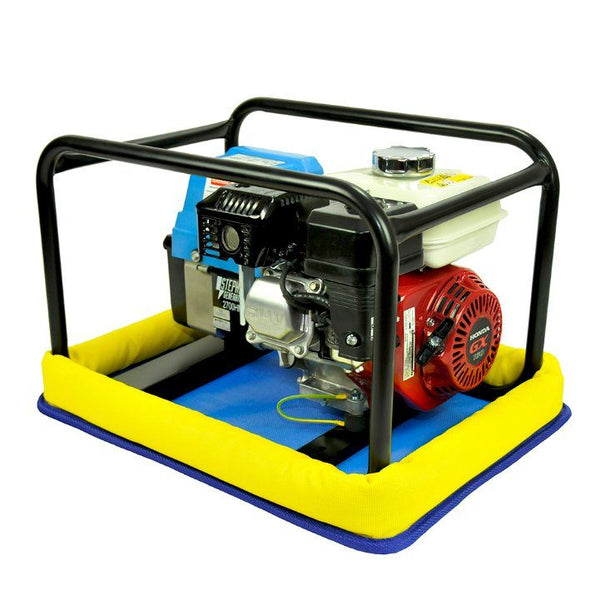
Plant Nappy Small - V3920507 - 500mm x 685mm
Talk to a specialist.
Sizing, regulations, installation. Our team has been answering these questions for 28 years.
Choosing the right Spill Mats
Protect your floors and workspaces with our versatile spill mats, designed to provide reliable containment for a wide range of applications. These durable mats offer excellent chemical resistance and can be easily positioned wherever you need spill protection. Perfect for maintenance areas, laboratories, and industrial settings, they provide a flexible alternative to fixed containment solutions. Their low-profile design allows for easy vehicle and pedestrian access whilst maintaining effective spill control. For more permanent solutions, consider our spill trays or for larger storage requirements, our spill pallets offer excellent containment capacity.
Our spill mats feature advanced construction techniques that ensure they remain flat and stable during use, preventing tripping hazards whilst maintaining their containment properties. The bermed edges effectively contain spills and drips, whilst the chemical-resistant materials ensure longevity even when exposed to aggressive substances. These mats are ideal for temporary workstations, vehicle maintenance areas, and anywhere you need quick, reliable spill containment. The portable nature of our spill mats means you can quickly deploy them in emergency situations or move them between work areas as needed. We offer various sizes to suit different applications, from small workshop mats to large-scale industrial solutions, all manufactured to meet environmental regulations and quality standards.
Spill Mats FAQs
What is a drain seal mat and how does it work?
A flexible polyurethane or rubber mat laid over a drain grate. Its own weight and flexibility create a seal against the surface, blocking liquid from entering the drainage system.
They are one of the highest-value items in any spill kit, because keeping a spill out of surface water drainage is usually the difference between a clean-up and a reportable pollution incident.
How quickly do they need to be deployed?
Immediately — before absorbing anything. Containment first, recovery second. Once fuel or chemical enters a surface water drain, response cost and regulatory consequence rise sharply.
This is worth rehearsing, because under pressure the instinct is to start soaking up the spill rather than protecting the drain.
Do they work on all drain types?
They work best on flat, reasonably clean grates and covers. Uneven, damaged, recessed or heavily soiled surfaces compromise the seal, and kerb-side gullies need a different profile of mat.
Check the specific drains on your site and buy mats sized and shaped for them rather than a generic square.
How do I maintain them?
Clean off grit and residue after use, store flat rather than folded, and keep out of direct sunlight. Mats that have hardened, cracked or taken a permanent crease will not seal.
Include them in the periodic spill kit inspection — a mat that has gone rigid in a cabinet looks perfectly serviceable until it is needed.
Can they be reused after a spill?
Usually, if cleaned thoroughly and undamaged. Mats used on aggressive chemicals may be degraded and should be inspected carefully before being returned to the kit.
Contaminated cleaning residue must be handled as hazardous waste.
Are there alternatives for larger openings?
Drain plugs and inflatable pipe stoppers seal within the pipe rather than over the opening, and are used for larger drains and where a mat cannot seal.
Some sites also fit permanent penstock valves on their surface water outfall, which can be closed in an incident and is the most robust solution for high-risk sites.
- Choosing a selection results in a full page refresh.
- Opens in a new window.

New customer offer
£25
off your first order
Minimum spend £500. One code per customer.
Join our mailing list
We'll email your discount code, plus stock updates and trade offers.
We use your email to send your discount code and marketing emails you've opted into. See our privacy policy for how we handle your data.
You're on the list
Check your inbox — your code is on its way. Add us to your safe senders so it doesn't land in spam.