


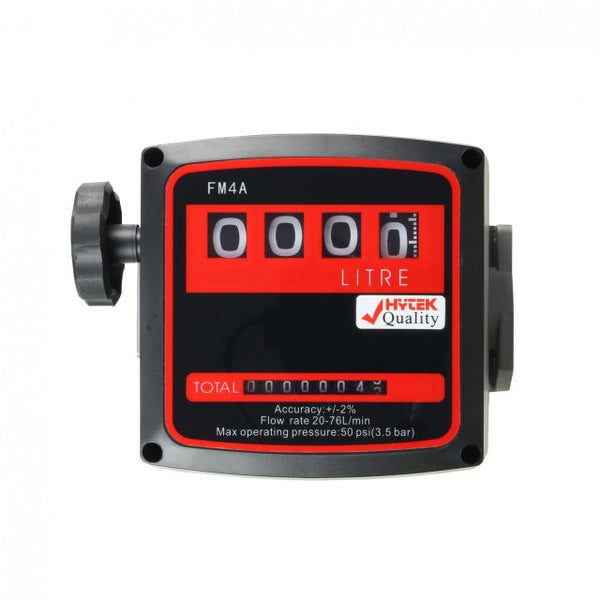
Diesel Flow Meter - 1 Inch
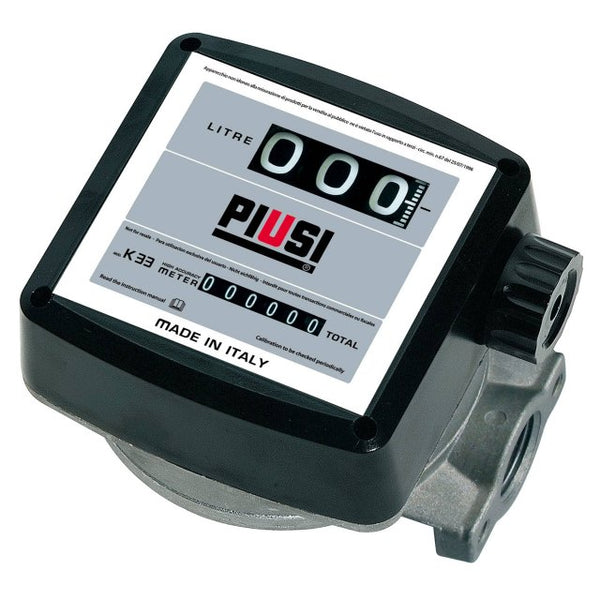
Piusi K33 Mechanical Fuel Flow Meter
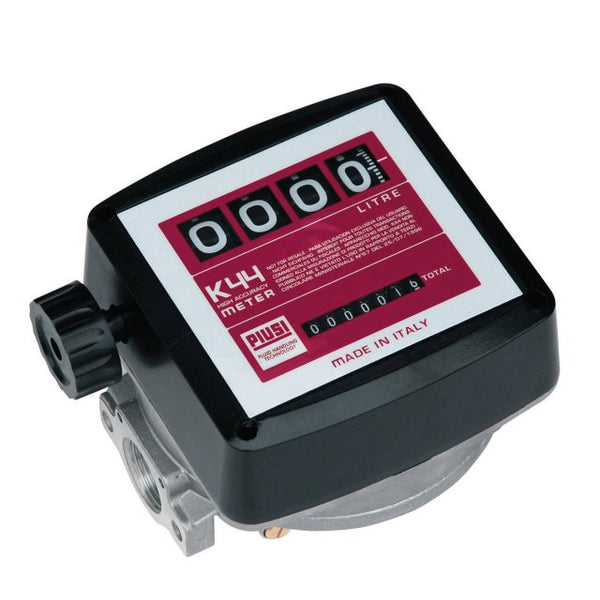
Piusi K44 Mechanical Fuel Flow Meter
Talk to a specialist.
Sizing, regulations, installation. Our team has been answering these questions for 28 years.
Choosing the right Mechanical Flow Meter
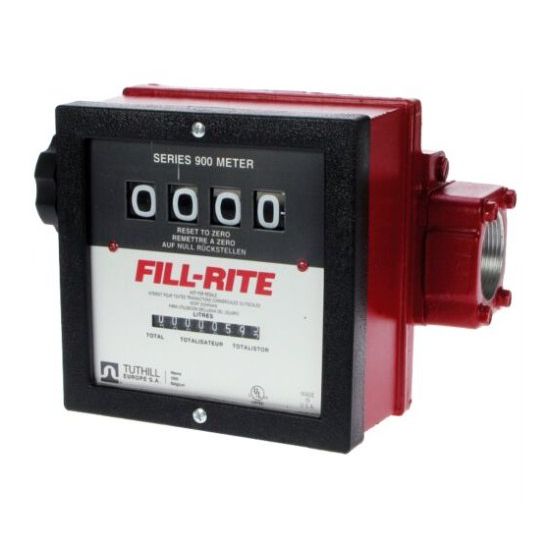
Mechanical flow meters from Fuel Tank Shop offer a reliable and cost-effective solution for monitoring and measuring fuel consumption. These devices utilise time-tested mechanical principles to provide accurate readings of fuel flow, making them an excellent choice for a wide range of applications. Unlike their digital counterparts, mechanical flow meters operate without the need for electrical power, ensuring consistent performance even in challenging environments or remote locations where electricity may not be readily available.
Whether you're a homeowner looking to keep track of your domestic fuel usage, a farmer managing agricultural equipment, or a business owner overseeing a fleet of vehicles, you'll find a mechanical flow meter that suits your requirements. They can be easily installed in-line with your existing fuel systems, providing immediate visibility into your fuel consumption patterns without the need for complex setup or integration. With fewer moving parts and no reliance on electronic components, these meters are less prone to failure and can withstand harsh conditions, including extreme temperatures and vibrations. This makes them an ideal choice for industrial environments or outdoor installations where reliability is paramount. Additionally, many of our mechanical flow meters feature clear, easy-to-read displays that allow for quick visual checks of fuel flow rates and total volume dispensed.
Mechanical Flow Meter FAQs
How does a mechanical flow meter work?
Most use nutating disc or oval gear principles — fuel passing through displaces a moving element a known volume at a time, and the movement drives a mechanical counter.
There is no electronics and no power requirement, which is why they remain popular on remote and simple installations.
How accurate are they?
Typically ±1% under normal flow conditions, which is adequate for stock control and usage monitoring. Accuracy falls off at very low flow rates, where the moving element does not turn consistently.
For trade-legal measurement, a meter with the appropriate approval is required regardless of type.
Mechanical or digital?
Mechanical wins on simplicity, durability and independence from power. Digital wins on readability, low-flow accuracy, batch totalising and the ability to feed a management system.
For a bowser or a remote tank, mechanical is often the more sensible choice. For a busy monitored fuel point, digital earns its place.
Can the totals be reset?
Most have a resettable trip counter for individual deliveries plus a non-resettable cumulative total for stock reconciliation. The cumulative total is the one to record periodically.
The non-resettable figure is what allows you to reconcile dispensing against tank level over time.
Does it need servicing?
Very little, but accuracy drifts as the internal element wears — particularly if fuel carries particulates or water. Fitting a filter upstream extends meter life considerably.
Verify against a known volume annually. If the meter reads consistently low or high, most models allow mechanical calibration adjustment.
Will it work with AdBlue?
Only if specified for AdBlue. Standard meters use brass and aluminium internals that corrode in urea solution, and contamination works in both directions.
AdBlue meters are made from stainless steel and compatible polymers and must be kept dedicated to that use.
- Choosing a selection results in a full page refresh.
- Opens in a new window.

New customer offer
£25
off your first order
Minimum spend £500. One code per customer.
Join our mailing list
We'll email your discount code, plus stock updates and trade offers.
We use your email to send your discount code and marketing emails you've opted into. See our privacy policy for how we handle your data.
You're on the list
Check your inbox — your code is on its way. Add us to your safe senders so it doesn't land in spam.