


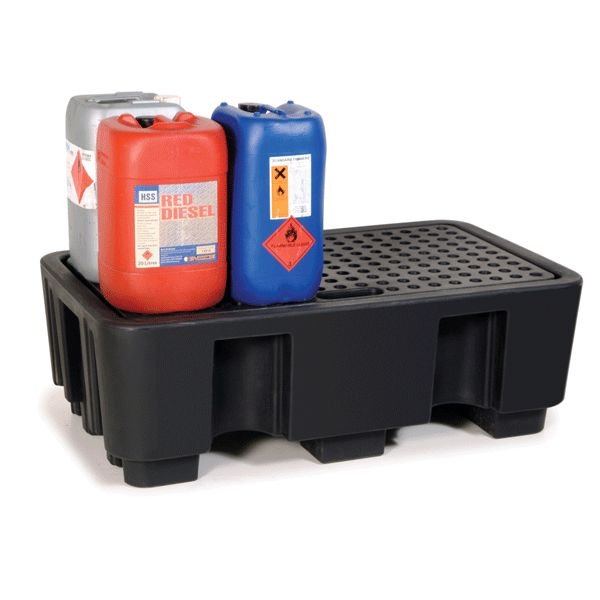
Armorgard DrumBank Pallet DBP2
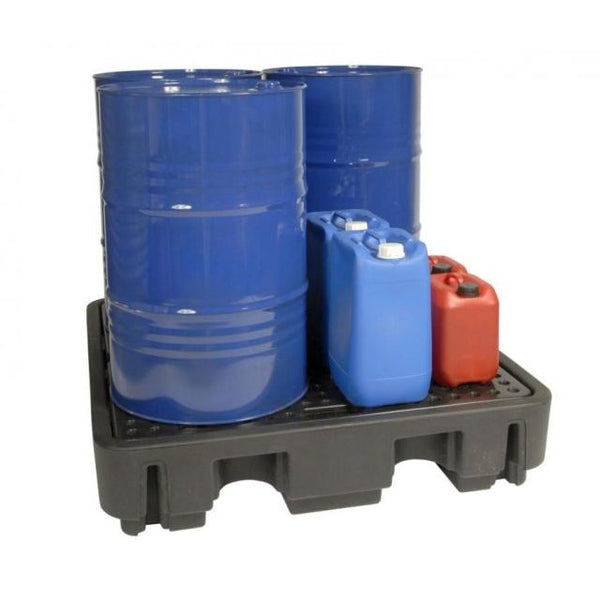
Armorgard DrumBank Pallet DBP4
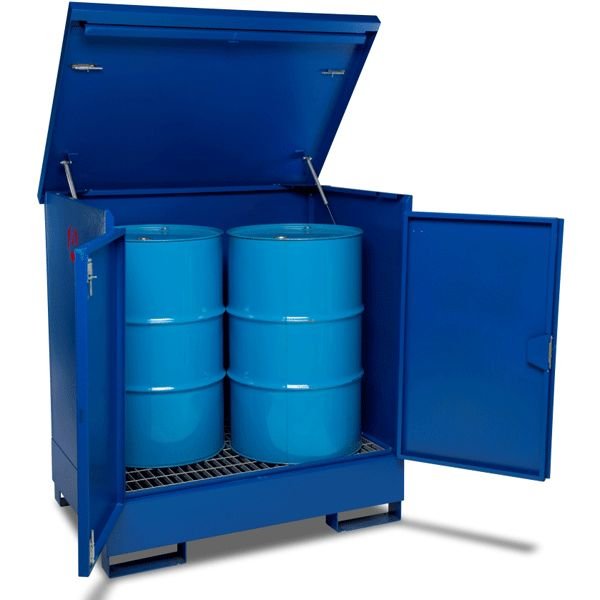
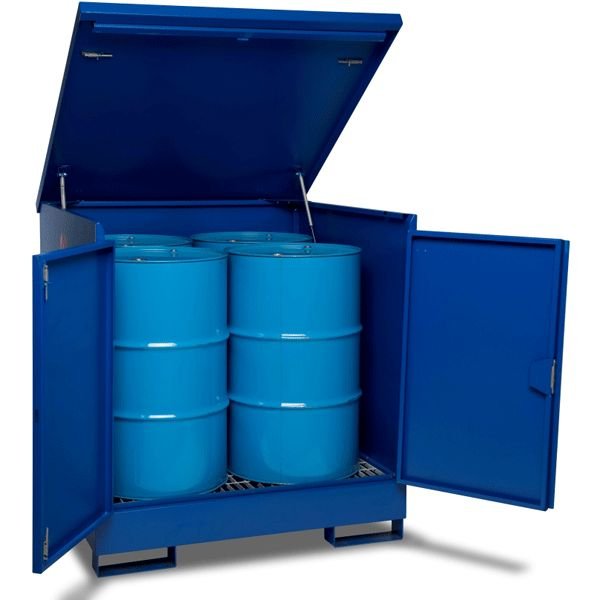
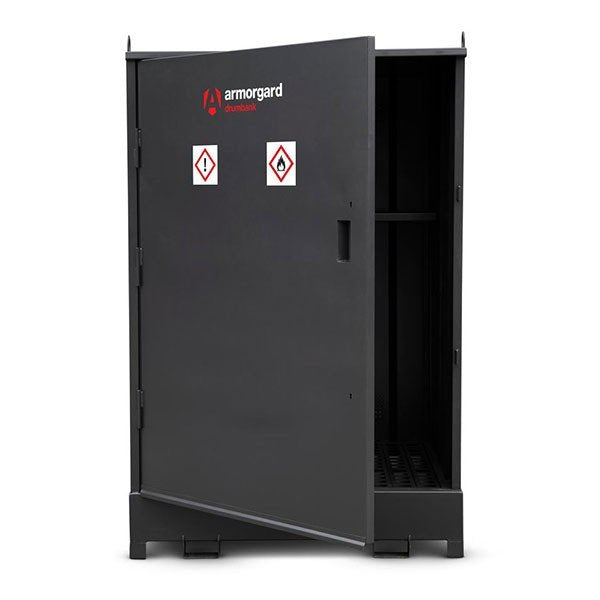
Armorgard DrumBank DB2 Enclosed Drum Storage
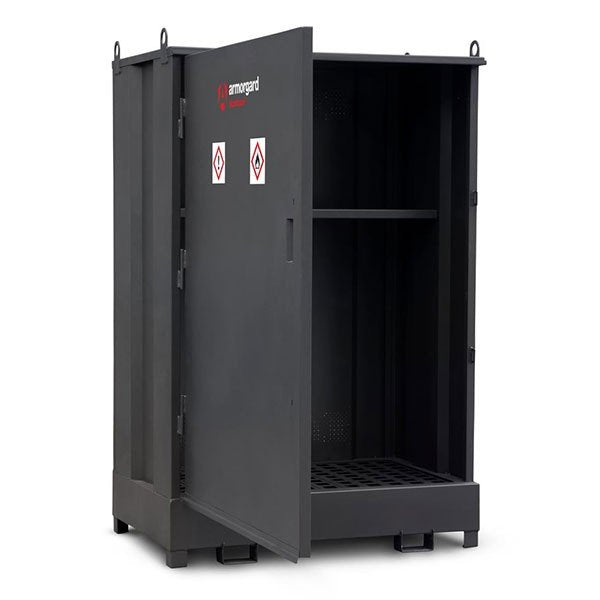
Drum Storage Container – Armorgard DrumBank DB2S
Talk to a specialist.
Sizing, regulations, installation. Our team has been answering these questions for 28 years.
Choosing the right Secure Drum Storage - Hazardous
Our comprehensive range of secure drum storage cabinets offers a practical and reliable way to store these substances securely. Designed specifically for drums, these lockable cabinets are approved for oil storage under current UK regulations, giving you peace of mind that your materials are contained safely. The sturdy design and locking mechanism help prevent spills, theft, or damage, which could otherwise lead to costly consequences. They’re straightforward to use, making it easy for you to store drums efficiently while maintaining safety. You can use them in various settings, from workshops to industrial sites, where keeping hazardous substances protected from unauthorised access or environmental risks is essential. Alongside these cabinets, we also offer options like walk-in stores for larger-scale needs, ensuring you have flexibility depending on your setup.
Secure Drum Storage - Hazardous FAQs
What is required to store drums of oil or chemicals outdoors?
Secondary containment providing 110% of the largest drum or 25% of the total volume, weather protection to keep rainwater out of the sump, security against unauthorised access, and hazard signage.
Segregation of incompatible substances is also required — a shared sump lets a leak from one drum reach another.
How many drums can one unit hold?
Drum stores are commonly sized for 2, 4, 8 or 16 drums, with sump capacity scaled accordingly. Check the stated sump volume against the 110% rule rather than assuming it is adequate.
Access matters as much as capacity — a unit packed to its rated number of drums may not allow the rear ones to be moved without emptying the front.
Should drums be stored upright or horizontally?
Upright with bungs uppermost is standard, keeping the closures out of any liquid and reducing the chance of seepage. Horizontal cradles are used where drums are dispensed from via a tap.
If drums are stored horizontally for dispensing, they need a drip tray beneath the tap as well as the main sump.
Does the store need ventilation?
For flammable and volatile substances, yes — natural high and low level ventilation preventing vapour accumulation. For non-volatile oils, a weather-sealed unit is usually more appropriate.
Match the specification to the substance rather than buying one type for everything.
What about drums that are part-used?
Part-used drums should be closed properly between uses, not left with the bung out or a pump sitting loose in the opening. Open drums admit water and, for flammables, allow vapour to escape.
Where frequent dispensing is needed, a proper drum pump with a sealed bung adaptor is the answer rather than leaving the drum open.
Do empty drums need the same storage?
Treat them as full until they have been properly cleaned and certified. Residue and vapour remain, and for flammables an empty drum containing vapour is arguably more hazardous than a full one.
Empty drums awaiting collection should be closed, labelled and stored in the same contained area.
- Choosing a selection results in a full page refresh.
- Opens in a new window.

New customer offer
£25
off your first order
Minimum spend £500. One code per customer.
Join our mailing list
We'll email your discount code, plus stock updates and trade offers.
We use your email to send your discount code and marketing emails you've opted into. See our privacy policy for how we handle your data.
You're on the list
Check your inbox — your code is on its way. Add us to your safe senders so it doesn't land in spam.