


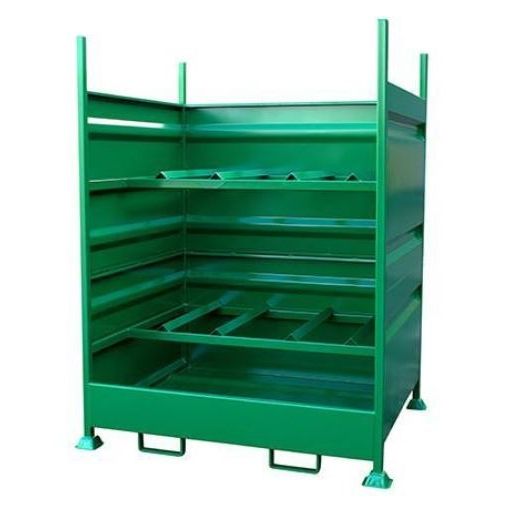
Horizontal Drum Stand - HD4
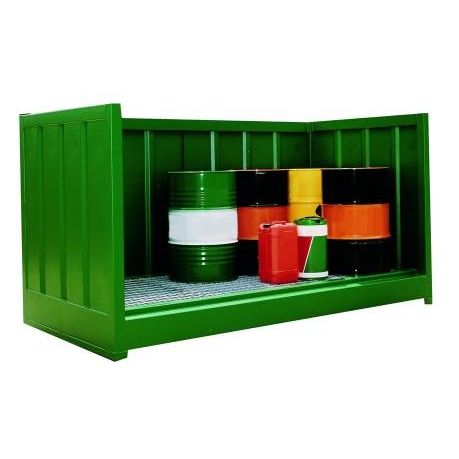
Indoor Bunded Store - IS8B
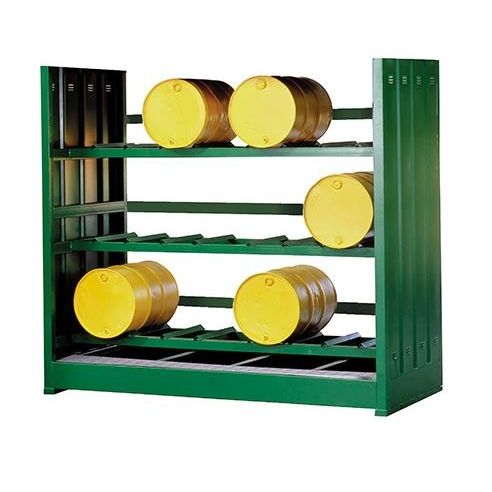
Indoor Bunded Store - IS12H
Talk to a specialist.
Sizing, regulations, installation. Our team has been answering these questions for 28 years.
Choosing the right Indoor Bunded Storage
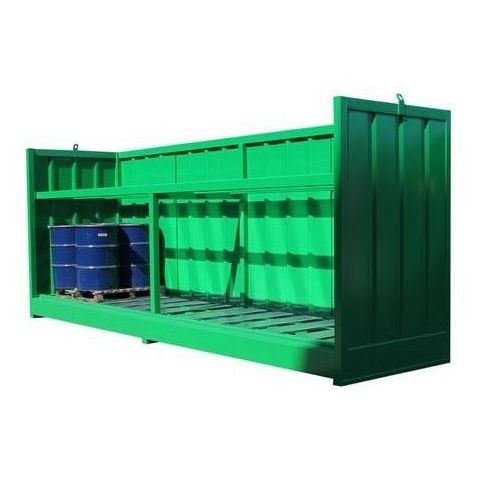
At Fuel Tank Shop, our indoor storage cabinets are designed to keep these hazardous substances secure within your building. These lockable units are built to meet UK regulations, making them suitable for storing drums or containers in environments such as workshops, garages, or warehouses. The secure design minimises the risk of spills or accidents, protecting your staff and premises while keeping you aligned with legal requirements. They’re straightforward to integrate into your existing setup and help you maintain an organised space while ensuring that dangerous materials are kept out of reach and properly contained. For those who also need external options, our outdoor bunded storage for hazardous materials provides a practical alternative, allowing you to adapt storage to your specific site layout.
Indoor Bunded Storage FAQs
What is indoor bunded storage for?
Holding oils, chemicals and flammable liquids inside a workshop or plant room with integral containment, so a leak is caught rather than spreading across the floor and reaching a drain.
It suits stock that needs to be accessible daily but should not be stored loose on shelving.
Steel or polyethylene indoors?
Steel is generally preferred indoors for flammable liquids because it will not contribute fuel to a fire and can carry a fire rating. Polyethylene suits corrosive chemicals that would attack steel.
Match the material to the substance, and where flammables are involved, prioritise the fire rating.
How much containment does it need?
The same principle applies indoors as out: 110% of the largest container or 25% of the total volume, whichever is greater. Sump capacity is stated by the manufacturer and should be checked rather than assumed.
Where several substances share one unit, remember that a shared sump allows incompatible liquids to mix.
Does an indoor store need ventilation?
For volatile and flammable substances, yes — vapour accumulation in an enclosed cabinet is a fire and health risk. Ventilated cabinets, or extraction to outside, are used where solvents are stored.
For non-volatile oils and most water-based chemicals, a sealed cabinet is appropriate and gives better spill containment.
Can I store flammables and corrosives in the same unit?
Not in the same sump. Segregation is required so that a leak from one cannot reach the other, either by using separate cabinets or a unit with internally partitioned compartments and individual sumps.
Acids and alkalis also need separating from each other, not just from flammables.
Where should it be positioned?
Away from escape routes, ignition sources and heat, with clear access for handling containers. It should be on a level floor capable of carrying the loaded weight.
Position should be reflected in the fire risk assessment, since a chemical store beside the only exit route changes the evacuation picture significantly.
- Choosing a selection results in a full page refresh.
- Opens in a new window.

New customer offer
£25
off your first order
Minimum spend £500. One code per customer.
Join our mailing list
We'll email your discount code, plus stock updates and trade offers.
We use your email to send your discount code and marketing emails you've opted into. See our privacy policy for how we handle your data.
You're on the list
Check your inbox — your code is on its way. Add us to your safe senders so it doesn't land in spam.