Fuel services · Fuel testing
Diesel fuel testing & sampling
Find out what's in your tank before it finds you. We sample stored diesel on site and test it for water, contamination and microbial growth, then give you a clear report on whether the fuel is fit for use and what, if anything, needs doing.
- Bottom, middle and top samples taken correctly on site
- Water, particulate and diesel bug (microbial) testing
- Laboratory analysis where a certificate is needed
- Plain English report with a recommended action
Book a fuel test
Leave your details and our service team will call to arrange a sampling visit.
Usually answered within one working day. No obligation.
What a fuel test tells you
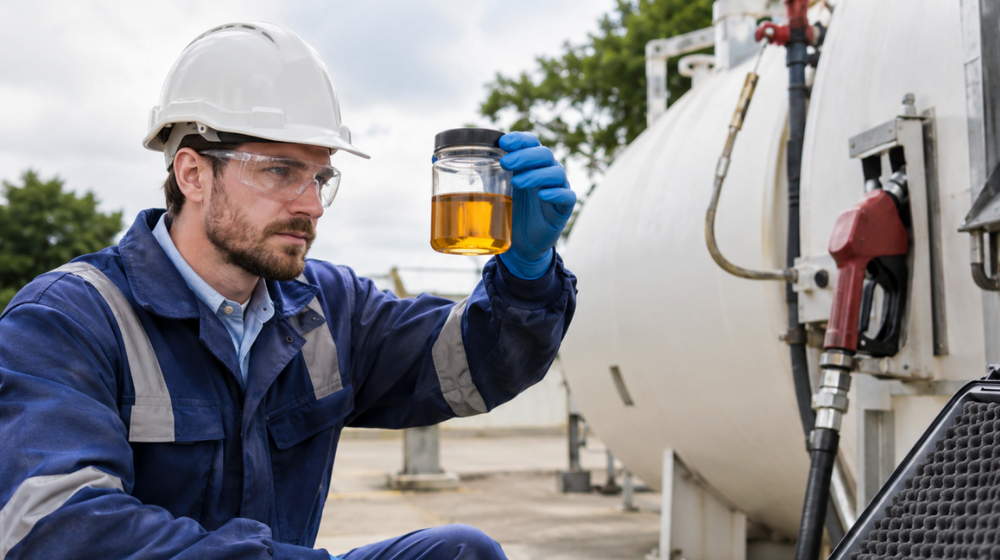
Good diesel is clear and bright. A sample taken from the bottom of the tank, where water and sludge collect, shows what the engine will be drawing in the hour you need it most.
01
Water content
Free and dissolved water. The root cause of diesel bug and of injector corrosion.
02
Microbial growth
Bacteria, yeasts and moulds, better known as diesel bug, graded from negligible to heavy so you know how urgent it is.
03
Particulates & sediment
Dirt, rust and oxidation sludge, measured against the cleanliness your engine maker expects.
04
Fuel condition
Appearance, colour and, with lab analysis, whether the fuel still meets specification for use.
Two levels of testing
Most customers start with an on-site check. An engineer visits, draws samples from each tank and runs water and microbial tests on the spot. You get a result the same day and a recommendation: fine, polish, or clean.
Samples are dated, labelled and kept for your records. If the result calls for it, the work can often be done on the same visit with a polishing rig already on site.
Lab analysis is there for when someone needs it in writing, and the two are usually combined: the engineer runs the field tests and sends the same samples away.
On-site sample & field test: [from £X per site].
Certified fuel analysis
- Samples go to an independent laboratory for a full analysis against the fuel specification.
- You get a written certificate of analysis to hand to an insurer, auditor or engine warranty provider.
- Suits critical standby power, warranty and insurance requirements.
- Results typically within 5 working days. [From £X per sample.]
When to get fuel tested
Testing is cheap next to the alternatives: a generator that won't start, a fleet of blocked filters, or disposing of thousands of litres that could have been saved.
Fuel stored over 6 to 12 months
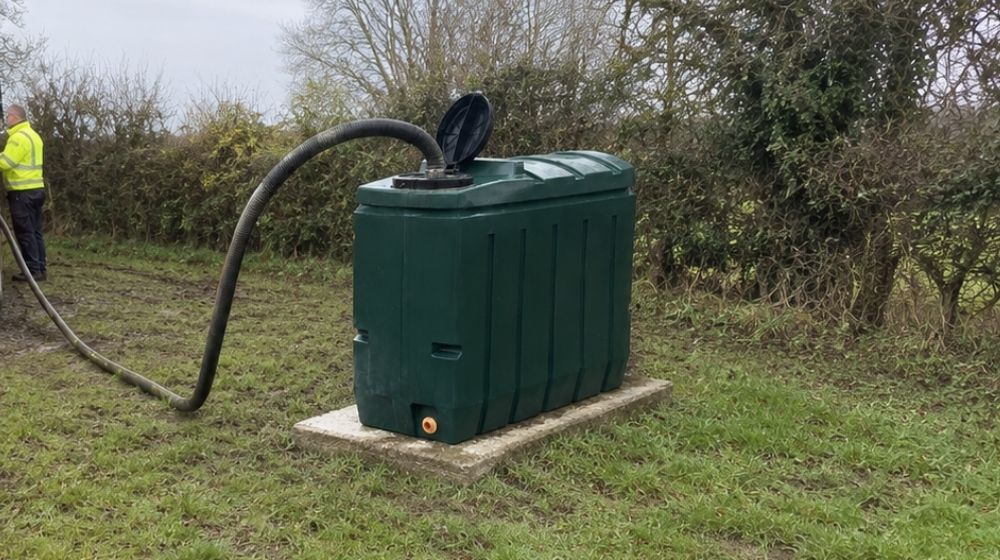
Standby generator and emergency tanks in particular, where the fuel sits still and condensation keeps adding water.
Filters blocking or rough running
Confirm diesel bug before you spend on treatment, rather than dosing a tank that doesn't need it.
Before a big delivery
Don't put fresh fuel on top of a contaminated tank bottom. A sample first tells you whether the tank is ready for it.
Taking over a site or tank
Know what you've inherited and record it, so a problem that was already there isn't yours by default.
Insurance or audit request
Evidence that the fuel is fit for purpose, with a lab certificate where the paperwork calls for one.
After polishing or cleaning
Prove the job worked and set a baseline to measure the next test against.
Who we test for
Standby generators & data centres
Fuel that sits for months is the highest-risk fuel there is. We sample on a schedule so it starts when it has to.
Fleet & depot tanks
Bulk storage feeding vans, trucks and plant. One contaminated tank spreads to every vehicle on it.
Farms & construction sites
Outdoor tanks, seasonal use and water ingress make agricultural and site tanks a regular callout for us.
Common questions
Can I take the sample myself and send it in?
You can, but where the sample is taken from matters a lot. A top sample from a contaminated tank can look perfectly clean. Our engineers sample from the tank bottom with the right equipment, which is what makes the result meaningful.
What happens if the test shows a problem?
We'll recommend the fix, usually fuel polishing and diesel bug treatment and occasionally a tank clean, and quote for it. If the engineer is already on site with a polishing rig, it can often be done the same day.
Do you test generator fuel on a schedule?
Yes. Many standby power customers have us sample every 6 or 12 months and polish when the result says so, rather than polishing blind. We manage the reminders.
Know what's in the tank
Book a sampling visit and our service team will be in touch to arrange it. A sample costs a fraction of a failed generator start.