- SKU · V12000BLKWT
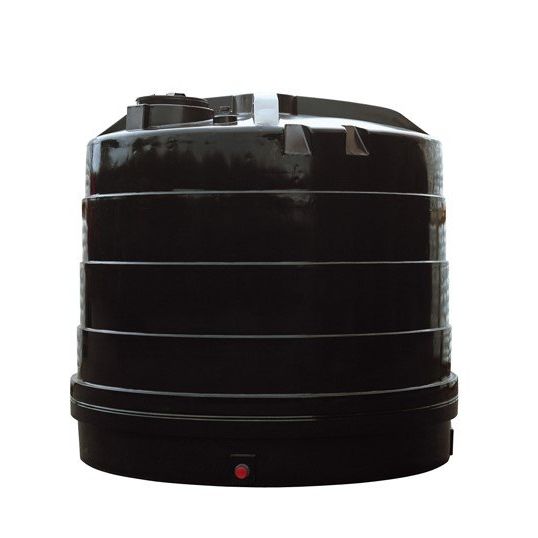
12,000 Litre Non-Potable Water Tank With Optional Outlet - V12000BLKWT
Options£1,190.00£1,428.00 -
Get a spec →
Not sure which tank you need?
Tell us your property, fuel type and typical annual use — one of our engineers will spec the right tank for you in 24 hours.
Talk to a specialist.
Sizing, regulations, installation. Our team has been answering these questions for 28 years.
Choosing the right Water Tanks
Extensive range of high quality water storage tanks suitable for Industrial, domestic and agricultural applications.
Our range includes a variety of water tanks from potable and non-potable, water bowsers. We also supply a range of accessories to make all water tank applications possible.
Water Tanks FAQs
What is the difference between potable and non-potable water tanks?
Potable tanks are manufactured from materials approved for drinking water contact and carry WRAS approval or an equivalent regulatory listing. Non-potable tanks are for irrigation, washdown, firefighting reserve and process water where the contents will not be consumed.
The two are not interchangeable — a non-potable tank must never be used for drinking water, and using a potable tank for chemicals will void its approval permanently.
How do I work out what capacity I need?
For domestic supply, size against daily consumption and the length of interruption you want to cover. For agricultural use, calculate stock numbers against daily intake, which varies substantially between species and season.
For rainwater harvesting, size against roof area and local rainfall rather than demand, since an oversized tank simply never fills and an undersized one overflows through the winter.
Do water tanks need a base?
Yes. A full 1,000-litre tank weighs over a tonne, and larger tanks considerably more. The base must be flat, level, continuously supporting the whole tank footprint, and capable of carrying the loaded weight without settlement.
Point loading is the most common cause of premature tank failure — a tank supported on uneven ground or spanning a gap will crack at the stress point, often after several years of apparently normal service.
Should the tank be above or below ground?
Above ground is cheaper to install, easier to inspect and simpler to replace. Below ground saves space, protects against frost and keeps the tank out of sight, but costs considerably more to install and requires the correct chamber and backfill.
Underground tanks also need consideration of groundwater — an empty tank in wet ground can float if it is not properly anchored.
How do I stop a water tank freezing?
Insulation jackets, insulated tank enclosures and trace heating are the usual approaches. Keeping the tank as full as practical also helps, since a larger thermal mass takes longer to freeze.
Pipework is generally more vulnerable than the tank body — outlets, valves and exposed runs freeze first and are worth insulating and lagging as a priority.
How often should water storage be cleaned?
Potable storage should be inspected at least annually and cleaned and disinfected when inspection indicates it is needed, or more frequently where guidance for the premises requires it. Look for sediment, biofilm, insect ingress and light penetration, which encourages algal growth.
Fitting a properly sealed lid and insect-proof vent prevents most contamination problems before they start.