Need help choosing?
Talk to a specialist.
Sizing, regulations, installation. Our team has been answering these questions for 28 years.
Phone
01643 704328Mon–Fri 8am–6pm
WhatsApp
Message usTap to open WhatsApp
Email
sales@fueltankshop.co.ukReply within 2 hoursAbout + buying guide
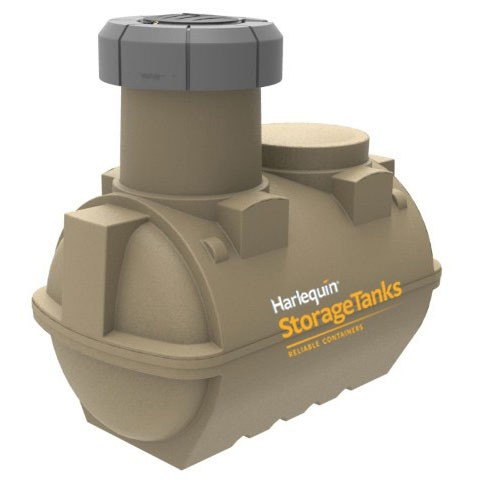
Choosing the right 2500L Underground Tanks
A 1,400-litre oil tank offers the perfect balance between capacity and compactness, making it an excellent choice for medium-sized fuel storage requirements. While it’s not a standard underground tank size, it is particularly suited for properties with moderate heating needs or limited space. These tanks are designed to provide reliable, efficient heating oil storage, ensuring you have ample fuel supply to maintain consistent home heating throughout challenging winter months.
Constructed with high-grade materials that offer superior corrosion resistance, advanced leak prevention technologies, and compliance with the latest environmental and safety standards, a 1,400-litre underground tank from Fuel Tank Shop delivers both performance and peace of mind. A 1,400-litre underground oil tank represents the perfect mid-range fuel storage solution for medium-sized properties, offering substantial fuel capacity without overwhelming your available space. If you’re considering a tank with a slightly smaller or larger capacity, we have a range of options to explore, from 1,250-litre and 2,500-litre underground oil tanks all the way up to 3,000-litre models.
Need help?
2500L Underground Tanks FAQs
Why install a 2,500 litre tank underground?
It removes the tank from view entirely, frees up ground for other use, protects the contents from frost and temperature swing, and sidesteps the fire separation distances that constrain above-ground siting.
On small plots, overlooked gardens and properties where an above-ground tank would be intrusive, it is often the only workable option.
Is 2,500 litres a sensible capacity?
For a typical oil-heated home using 1,500 to 3,000 litres a year, it covers most of a heating season and allows buying when prices are favourable rather than when the tank is empty.
Because underground installation is expensive and disruptive, it is generally worth fitting the largest capacity the excavation will take rather than the smallest that meets today's need.
What does installation involve?
Excavation, a level and compacted base, the correct backfill material, anchoring where groundwater is possible, an access chamber for the fittings and gauge, and the fill and supply pipework.
Backfill and anchoring are where installations go wrong, and both are impossible to correct without re-excavating.
Can the tank float out of the ground?
Yes, if it is empty or part-full in ground with a high water table. The tank displaces water and can be pushed upward, damaging pipework and lifting the surrounding surface.
Anchoring — typically a concrete base slab with strapping over the tank — prevents this and should be specified wherever groundwater is a possibility rather than only where it is currently evident.
How do I check the level and spot a leak?
Through the access chamber, though remote-reading and telemetry gauges are common on buried tanks precisely because physical checks are inconvenient.
Leak detection matters more underground than above ground, since a slow loss will never be visible. Twin-wall tanks with interstitial monitoring are the standard answer.
Can it be driven over?
Only if the tank and its installation are specified for traffic loading, with an appropriate chamber and cover. Standard underground tanks are designed for landscaped or pedestrian areas.
If a driveway or parking area is planned over the tank, that must be specified at the outset — retrofitting traffic-rated cover arrangements is not straightforward.